When a client site breaks, the client does not call the host, the plugin developer or whoever ran last week’s updates. They call you. Your agency’s name is on the site, so your agency carries the problem, whether or not anybody at your agency touched the thing that broke.
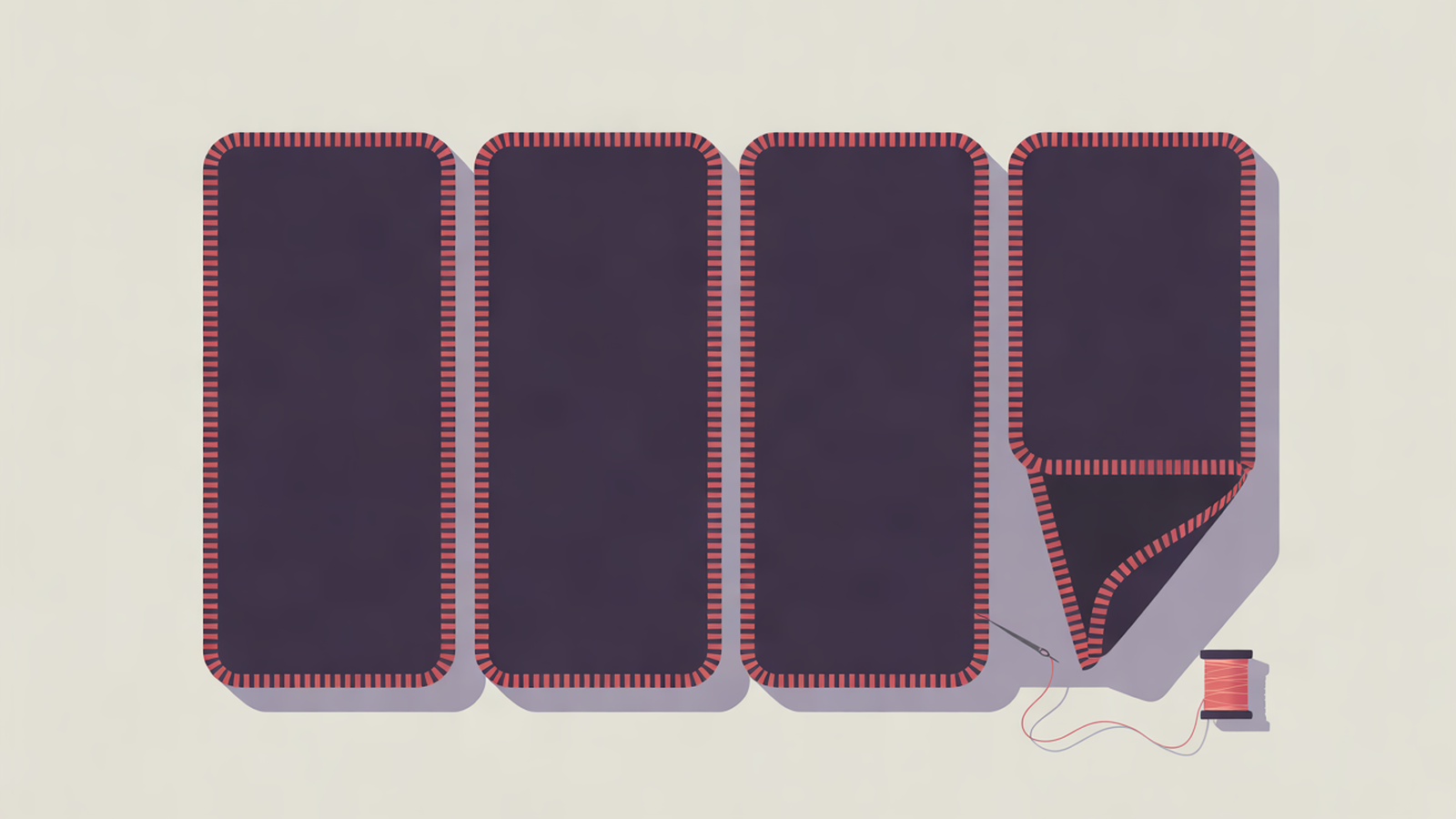
That is what makes maintenance different for an agency. The verdict first, so you can stop reading if it is all you need: for an agency, WordPress maintenance is not mainly a list of tasks. It is four seams: who holds the accounts, who sees a problem first, who decides when things change, and who tells the client. Updates and backups matter, and most agencies already know how to do them. What goes wrong is almost always at a seam, where one party assumed another had it.
Why agency maintenance is a different job
A business maintaining its own site has one site, one stack and one person to keep informed. An agency has a portfolio: sites built in different years, on different themes, with different plugins, for clients who each believe theirs is the most important site you run.
That changes the shape of the work in three ways.
It multiplies the variation. The update that is routine on one client’s brochure site is the one that breaks another client’s booking form, because that site is three years older and runs a plugin nobody else uses.
It moves the blame without moving the control. If your hosting provider has an outage, your client experiences it as your outage. If a freelancer you subcontract misses an update, your client experiences it as your mistake.
And it turns communication into part of the maintenance. A fix that nobody explains to the client can still cost you the client. The work is not finished when the site is working again. It is finished when the client knows what happened and believes it is handled.
Seam one: who holds the accounts
The first question is the least technical and the most expensive to get wrong. Whose name is on the domain registration, the hosting account, the analytics, the payment gateway and the plugin licences?
Agencies often register these on the client’s behalf to save time at launch. It feels like service. Years later it becomes a problem in both directions. If the client leaves, the handover becomes a negotiation. If the agency loses track of a renewal, the client’s domain expires on your watch.
The cleanest arrangement is that the client owns every account and the agency has delegated access. The client can always leave. The agency can always work. Nobody is holding keys they should not have, and nobody is locked out of something they paid for.
If you bring in a maintenance partner, the same rule extends one level down. The partner works inside accounts your client owns, through access you can revoke. A partner who needs to own the accounts to do the work is building a dependency, not a service.
Seam two: who sees a problem first
Your client should never be your monitoring system. If the first sign of an outage is an email from the client, the agency has already lost the conversation, because the client now knows something you did not.
Every site in the portfolio needs an outside check that alerts a named person before the client notices. Not a shared inbox that everyone assumes someone else reads. A person, with a backup person, and a rule for what happens at night and at weekends.
The same applies to quieter failures. A contact form that stops sending, a checkout that loads but cannot take payment, an expired SSL certificate on a client’s subdomain: none of these takes the site down, and all of them are the agency’s problem the moment the client finds out. Decide which of these each client’s site needs watched, and write it down per client.
Seam three: who decides when things change
Across a portfolio, updates are not one job repeated. They are a rollout. The practical questions are about order and timing, not about clicking update.
Order: update the sites you can afford to break first, and the ones that take money or bookings last, after the same update has run cleanly elsewhere.
Timing: a retailer’s busiest week, a nonprofit’s donation drive and a course creator’s launch are the wrong times for a major update, and the client will not think to warn you. Keep each client’s calendar next to the maintenance schedule.
Testing: a page that loads is not a test. Each type of site needs its own check after an update: a form submitted, a booking made, a test order placed. The test should match what the client’s business actually depends on.
Rollback: know before the update what you will do if it goes wrong, and who decides. On a site that takes orders or bookings, restoring last night’s backup can erase real customer activity from today.
Seam four: who tells the client
This is the seam agencies most often leave implicit, and it matters most when you bring in outside help.
When something breaks and a partner fixes it, somebody has to tell the client: what happened, what was done, and whether anything is needed from them. If that somebody is not decided in advance, one of two things happens. Nobody tells the client, and they find out from their own customers. Or the partner tells the client directly, and your client now has a relationship with your supplier.
Decide in advance whose voice the client hears. Some agencies want their partner invisible, working under the agency’s name. Others introduce the partner openly as their hosting and maintenance team, because a named specialist reassures the client. Either can work. What does not work is leaving it unsaid until the first incident.
What a maintenance partner should and should not do for an agency
A good partner makes the agency look reliable and stays out of the client relationship. In practice, that means four things.
- They work inside client-owned accounts, with access the agency can revoke.
- They alert the agency first, through a channel the agency chose, before the client notices.
- They follow the agency’s rollout order and the client calendars, rather than updating everything at once.
- They never sell to the agency’s clients. Design, development and strategy requests from a client go back to the agency.
That last point is the one to ask about directly, because it is where incentives can drift. It is also how we work: when an agency’s client asks us for design, development or strategy, we refer them back to the agency. We can work behind your brand, or you can introduce us as your hosting team, whichever you prefer.
If you would rather hand the four seams to somebody whose job it is, you can see exactly what each Sunny HQ plan includes on our plans page. When something does need a person, our October measurement is 22 minutes to a person, and half our tickets are faster than that. That is time to a human reply, not time to a fix.
What to keep, whoever does the work
Some things should stay with the agency, whoever runs the maintenance:
- The client relationship. Every conversation about scope, budget and priorities.
- The calendar. Which weeks matter to which client, and when change is not allowed.
- The decision to restore or repair on any site that takes money or bookings.
- The record. A short note per client of what was updated, what broke and what was done about it. When a client asks what you have done for them this quarter, this is the answer.
And the client keeps ownership of their accounts, always, so that whatever happens between any of you, their business is never hostage to it.
Questions to ask a maintenance partner
- Whose name will be on the accounts, and can I revoke your access?
- Who is alerted first when a client site has a problem, and how?
- Will you follow my rollout order and my clients’ calendars?
- What do you test after an update, per type of site?
- Who tells my client what happened, and in whose name?
- What happens when one of my clients asks you for design or development work?
A good answer to each is a name and a habit. A vague answer to the last one tells you most of what you need to know.
The Bottom Line
Agencies rarely lose clients over a missed plugin update. They lose them at the seams: an account nobody could find, an outage the client reported first, an update during a launch, a fix nobody explained. Put a name on each seam, in writing, before the first incident, whether the work stays in house or goes to a partner.
Frequently Asked Questions
What should WordPress maintenance for agencies include?
The usual tasks, updates, backups, security and monitoring, plus four decisions specific to agencies: who owns each client’s accounts, who is alerted first when a site has a problem, the order and timing of updates across the portfolio, and who tells the client what happened.
Should an agency or its client own the hosting and domain accounts?
The client should own every account, with the agency and any maintenance partner working through delegated access. The client can always leave, the agency can always work, and nobody holds keys they should not have.
Can a maintenance partner work under my agency's brand?
Many can. The alternative is to introduce the partner openly as your hosting and maintenance team. Either works, as long as you decide in advance whose voice your client hears when something goes wrong.
How should an agency roll out WordPress updates across many client sites?
Update the sites you can most afford to break first and revenue-critical sites last, avoid each client’s busy periods, test each site against what its business depends on, and decide in advance who chooses between restoring a backup and repairing in place.